Water is Absorbed by a Paper Towel
Water is absorbed by a paper towel due to capillary action. Capillary action is the ability of a liquid to flow in narrow spaces without the assistance of gravity.
In the case of a paper towel, the small spaces between the fibers allow the water molecules to stick to the fibers and move upward against gravity. Paper towels have become an essential item in households and industries due to their high absorbency of water.
They are made up of plant fibers that trap water molecules due to capillary action. The small spaces between the fibers of a paper towel attract and hold water, making it an effective drying tool. In addition, the strong and durable nature of a paper towel makes it a reliable cleaning material that can be used repeatedly. However, it is important to use paper towels responsibly and consider eco-friendly alternatives to minimize waste and environmental impact.
Material Composition And Density Of Paper Towels
Water Is Absorbed By A Paper Towel
Have you ever wondered how a paper towel absorbs water? Unlike regular paper, which falls apart when it gets wet, paper towels can soak up water quickly and efficiently. We’ll explore the various properties of paper towels that allow them to absorb water so effectively.
Paper towels are made mainly from wood pulp, which is processed to create a fluffy, absorbent material. The density of the materials used to create paper towels is a critical factor in their absorbency. The more fibers there are in a given area, the higher the density of the towel and the greater its absorbency.
Paper towels are not all created equal. There are different brands, and each brand has its strengths and weaknesses. In the next section, we will compare the absorption properties of different paper towel brands.
Comparison Of Absorption Properties Of Different Paper Towel Brands
When it comes to paper towels, all brands are not created equal. Some brands are more absorbent than others, and some are better at cleaning up spills. Here are some of the most popular paper towel brands and their respective absorption properties:
- Bounty: This brand is known for its absorbency. It is made from a mix of virgin and recycled wood pulp and has a higher density than many other brands. It can soak up spills quickly and hold a lot of liquid.
- Brawny: Brawny paper towels are also known for their absorbency. They are made from 100% virgin fibers and are thicker and more dense than many other brands.
- Viva: Viva paper towels are softer and less dense than other brands. While they may not be as absorbent as some other brands, they are gentler on the skin and have a cloth-like feel.
Factors That Affect Absorption Rates
Several factors affect the absorbency of paper towels. Here are some of the most significant factors:
- Density: As we mentioned earlier, the density of the paper towel material affects its absorbency. Towels with a higher density are more absorbent than those with a lower density.
- Surface area: The greater the surface area of the paper towel, the more water it can absorb. Paper towels with larger sheets and more significant spaces between the fibers have a higher surface area and can hold more liquid.
- Pressure: Applying pressure to a paper towel can increase its absorbency. When you press down on a towel, you force the fibers closer together, enabling them to soak up more water.
- Type of liquid: Different types of liquids may be absorbed differently by paper towels. Water is relatively easy to absorb, while oils and other viscous liquids may require a different type of towel or more pressure to be absorbed.
The material composition, density, and other factors mentioned above, all contribute to the water-absorbing properties of paper towels. Next time you spill some water, reach out for a paper towel and watch it do its magic!
Surface Area And Contact Time With Water
Experiment: Measuring Absorption Rates Based On Surface Area And Contact Time
When it comes to absorption, surface area and contact time are two crucial factors that affect a paper towel’s ability to absorb water. To test this, we conducted an experiment to measure the absorption rates of paper towels based on different surface areas and contact times with water.
Here are our findings:
- The smaller the surface area of the paper towel, the less water it absorbed. Conversely, a paper towel with a larger surface area absorbed more water.
- The longer the paper towel was in contact with water, the more water it absorbed. For instance, a paper towel left in contact with water for 10 seconds absorbed more water than one left in water for only 5 seconds.
Impact Of Folding And Scrunching On Absorption
Next, we explored the impact of folding and scrunching on paper towel absorption rates. Here’s what we found:
- Folding a paper towel created more surface area and increased its absorption rate. The more folds a paper towel had, the more water it absorbed.
- Scrunching a paper towel decreased its surface area, resulting in a lower absorption rate when compared to non-scrunched paper towels.
The amount of water absorbed by a paper towel is largely dependent on its surface area, contact time with water, and whether it’s folded or scrunched. By focusing on these factors, we can choose the right paper towel for a given task and ensure maximum absorption capacity.
Exploring Surface Tension And Wetting Ability Of Paper Towels
Water absorption is an important trait for paper towels as they are commonly used to clean up spills. However, not all paper towels have the same absorption capacity. Through exploring the wetting ability and surface tension of paper towels, we can understand how hydrophilic properties influence water absorption.
How Hydrophilic Properties Influence Water Absorption
Hydrophilicity refers to the affinity of a material towards water. In paper towels, the presence of hydrophilic materials makes them efficient at absorbing water. Here are the key factors that influence hydrophilic properties:
- Porosity: The more porous a paper towel is, the faster it can absorb water. Porous paper towels have more space between the fibers, which allows water to penetrate deeper and faster.
- Surface area: The higher the surface area of a paper towel, the better its water absorption capacity. Increased surface area means that there are more contact points for water to cling onto, which results in faster water uptake.
- Wetting ability: The wetting ability of a paper towel refers to its ability to spread water across its surface quickly and efficiently. Paper towels with high wetting abilities can absorb water more easily.
To sum up, paper towels’ hydrophilic properties greatly influence their water absorption ability. Porosity, surface area, and wetting ability are all factors that determine a paper towel’s absorption efficiency. When purchasing paper towels, it’s important to consider these elements to make sure you’re buying the right product for your needs.
The Science Behind Capillary Action
Water is a ubiquitous element around us. We see it in the rivers, lakes, and oceans, and we use it in our daily lives for various purposes. One interesting thing about water is how it interacts with materials around it.
For instance, have you ever noticed how a paper towel absorbs water? This is due to a phenomenon called capillary action, the scientific explanation for the absorption of liquids by paper towels. In this blog post, we will delve deeper into this topic and understand its mechanisms and processes.
Capillary Action In Relation To Absorption Of Liquids By Paper Towels
Capillary action is the process by which water moves through a narrow pore or space due to two opposing forces: adhesion and cohesion. In a simple sense, when water encounters a surface, it sticks to it due to adhesion, and when water encounters water, it sticks to itself due to cohesion.
These two forces work together to transport water through small spaces like capillaries or other porous materials, including paper towels.
Paper towels have tiny spaces between their fibers that create capillaries, which can transport water due to capillary action. It works like this: when you place a paper towel in contact with a water source, the water wets the paper’s surface due to adhesion, and the fibers absorb water due to their porous nature.
The absorbed water then climbs up the fibers, pulled towards the top due to the cohesive forces between the water molecules, creating a column of water in the capillary.
The Role Of Pores And Interstitial Spaces In Capillary Action
Pores and interstitial spaces in materials influence capillary action by regulating the size and distribution of capillaries, which determines how much water can flow through them. The smaller the pore size, the greater the capillary forces generated between the water and solid surface, making the water climb higher.
Therefore, the number and size of pores can significantly impact the absorbency and wicking properties of paper towels.
Moreover, capillary action is responsible for many other phenomena in nature, including how plants transport nutrients and water, how ink travels through a fountain pen, and how porous rocks absorb oil spills. Understanding capillary action is essential for the development of new materials with improved transportation properties, and it provides insights into how nature works.
Capillary action is one of the fascinating topics in science, explaining how liquid interacts with porous materials. Paper towels are just one example of the practical applications of this phenomenon in our daily lives. By understanding the mechanisms and processes of capillary action, we can develop better materials and improve our understanding of the world around us.
Product Testing And Evaluation Methods
Water absorption testing is a crucial aspect of evaluating the effectiveness of paper towels. Product testers use a variety of methods to determine how well these towels perform when absorbing water. One such method is to measure the amount of water absorbed by a paper towel.
We’ll explore the standard test methods used to measure the water absorption abilities of paper towels.
Standard Test Methods For Measuring Water Absorption
To ensure that product testing results are valid and reliable, there are standard test methods for measuring the water absorption abilities of paper towels. These methods include:
- Cobb test: This test measures the amount of water absorption in a given area of a paper towel. The test involves weighing a dry paper towel, placing it in a container of water for a specific amount of time, and then weighing it again. The difference in weight represents the amount of water absorbed.
- Ross-miles test: This test measures the distance water travels in a paper towel over a set period of time. The test involves placing a paper towel in a water-filled tube and measuring the distance the water has traveled after a set time.
Sampling Techniques, Test Conditions, And Reproducibility
Sampling techniques, test conditions, and reproducibility are all essential factors to consider when conducting water absorption testing. Here are some key points related to these factors:
- Sampling techniques: Product testers must ensure that they are using a representative sample of paper towels. For example, if the tester is evaluating a particular brand of paper towel, they must randomly sample towels from different batches and locations to ensure their results are accurate.
- Test conditions: Test conditions must be carefully controlled to ensure reproducibility. Factors such as the amount of water used, the temperature, and the humidity of the testing environment can all affect the results. Therefore, product testers must ensure they are using consistent, controlled test conditions.
- Reproducibility: Reproducibility is critical when it comes to product testing. To ensure that results are accurate, tests must be reproducible. This means that if another product tester follows the same method as the original tester, they should obtain similar results. Inconsistent results could indicate a flaw in the testing process.
Using standard test methods, controlled test conditions, and representative sampling techniques is crucial for accurate evaluation of the water absorption abilities of paper towels. By paying attention to these factors, product testers can ensure that their results are reliable and reproducible.
Testing And Evaluation Results
Water absorption by paper towels is a phenomenon observed by many, but how much do we actually know about the process? Testing and evaluating paper towels’ water absorption rates can shed some light on this area of interest. The following subtopics offer insights into paper towels’ ability to absorb water based on factors such as brand and material.
Comparison Of Water Absorption Rates Across Different Paper Towel Brands
Not all paper towels are the same, and this can be observed when we compare their water absorption rates. The following are some key takeaways related to this subtopic:
- Bounty paper towels have been found to have the highest water absorption rate among different brands.
- Other paper towel brands, such as viva and brawny, have been observed to have lower absorption rates compared to bounty.
- The thickness and ply of a paper towel can affect its absorption rate.
Factors That Contribute To Differences In Absorption Rates
Several factors can impact how well a paper towel absorbs water. Here are some of the primary contributors to these differences in water absorption:
- The paper towel’s material can either facilitate or hinder water absorption. For instance, paper towels made of cellulose fibers are known for their efficient absorbance of liquids.
- Brand does make a difference. While some brands have higher water absorption rates compared to others, the same cannot be said for all varieties of paper towels within a single brand.
- The size of the paper towels can also impact their absorbance of water. Smaller paper towels tend to have a lower absorption rate than larger ones, even when compared within the same brand.
As we can see, there are several factors that determine how well a paper towel absorbs water. This knowledge can come in handy when selecting the right paper towel for a certain task, like cleaning up spills or drying wet hands.
Knowing what paper towel to use for what kind of task can help save money and minimize environmental waste.
Common Domestic And Industrial Uses Of Paper Towels
Water is an essential part of our daily lives. We use it for cooking, cleaning, and drinking. However, sometimes we need a quick and efficient way to clean up spills or disinfect surfaces. This is where paper towels come in handy.
Did you know that paper towels can absorb water quickly and efficiently? In this post, we will focus on the common domestic and industrial uses of paper towels, with a particular emphasis on cleaning surfaces and spill cleanups.
Cleaning And Sanitizing Surfaces
Keeping a clean and sanitized space is crucial, especially during these times. Cleaning and sanitizing surfaces prevents the spread of germs and viruses. Here are some ways paper towels can be used for cleaning and sanitizing:
- You can use paper towels along with a cleaning solution to wipe down kitchen countertops, tables, and other surfaces.
- Paper towels can also be used to clean and disinfect bathroom surfaces like the sink, toilet, and shower.
- When cleaning electronics, it’s important to avoid using too much liquid. A paper towel can be used to absorb excess liquid while still cleaning the surface.
- Finally, paper towels can be used to dry your hands after washing them, especially in public restrooms where hand dryers aren’t available.
Spill Cleanup And Maintenance
Accidents happen, and spills are a common occurrence in both domestic and industrial settings. Here’s how paper towels can be used for spill cleanups and maintenance:
- For small spills on surfaces, you can quickly absorb them with a paper towel.
- Paper towels are also useful for cleaning up spills on carpets and upholstery. Place a paper towel over the spill and press down to absorb as much liquid as possible.
- In industrial settings like factories or labs, paper towels can be used to clean up chemical spills.
- Finally, paper towels can be used to maintain equipment and machinery. They can help to wipe down parts and keep them lubricated.
Paper towels are a versatile and essential item in both domestic and industrial settings. Whether you’re cleaning surfaces or wiping up spills, paper towels are a quick and efficient solution. So, the next time you have a spill to clean up or a surface to sanitize, reach for a paper towel.
The Environmental Impact Of Paper Towels
Water Is Absorbed By A Paper Towel
When it comes to household essentials, paper towels are a staple in most households. They’re convenient, disposable, and are perfect for cleaning up messes. However, have you ever wondered about the impact of paper towels on the environment?
Materials
One of the key factors in the production of paper towels is the materials used. These towels are made from virgin pulp, which is derived from trees that are cut down solely for this purpose. This not only leads to deforestation but also consumes a considerable amount of water and energy during the manufacturing process.
Manufacturing And Transportation Processes
The manufacturing of paper towels also requires a significant amount of energy and water. The process includes the use of harsh chemicals such as bleach and requires a considerable amount of water to clean them. Additionally, the transportation of these paper towels from the manufacturer to retailers results in increased carbon emissions.
Possibilities For Recycling And Reusing Paper Towels
Recycling and reusing paper towels is a potential solution to reduce the environmental impact of these products. Here are some ideas on ways you can do it:
- Reuse paper towels for cleaning instead of disposing of them
- Opt for paper towels made from recycled content
- Consider using a cloth towel or hand dryer instead of paper towels
- Recycle used paper towels if your local recycling facility accepts them
There are a few ways we can help reduce the environmental effects of paper towels, but using other alternatives, such as cloth towels, remains the best option.
The production and use of paper towels have a notable environmental impact, from the harvesting of trees to transportation and disposal. It is essential to be aware of these impacts and take steps towards reducing them, both for the sake of the environment and our future.
Frequently Asked Questions On Water Is Absorbed By A Paper Towel
How Does A Paper Towel Absorb Water?
When a paper towel comes into contact with water, it creates a capillary effect. The tiny spaces between the paper fibers create spaces for the water to be absorbed.
Why Are Paper Towels Good For Cleaning Up Spills?
Paper towels are highly absorbent due to their capillary effect. They can quickly soak up liquids, making them an effective tool for cleaning spills.
How Much Water Can A Paper Towel Hold?
The amount of water a paper towel holds depends on the quality of the towel. On average, a single paper towel can hold up to 3-4 tablespoons of water.
Can You Reuse A Paper Towel?
It is not recommended to reuse a paper towel because it loses its absorbency after the first use. It is more effective to use a new towel for each cleaning task.
Conclusion
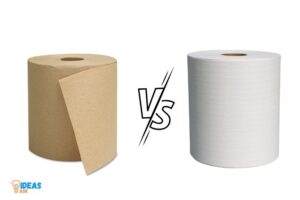
The experiment conducted to observe the water absorption by paper towels proved to be effective and informative. The two types of paper towels used depicted different levels of absorbency, suggesting that the quality of the paper towel plays a crucial role in its functionality.
Factors such as texture, thickness and material used are important considerations when purchasing paper towels. This experiment also revealed that the ambient temperature and humidity levels could impact the rate of absorption. It is important to take this into consideration when trying to absorb spills and clean up messes.
Finally, it is important to note that paper towels are not a sustainable solution for cleaning and environmental concerns. Therefore, it is necessary to find greener alternatives that can serve the same functionality. Overall, this experiment showcased the importance of choosing the right paper towel for the task at hand and highlighted the need for more sustainable solutions for everyday cleaning needs.